Geometric Blue Papers
If you're designing for men—whether it's a Father’s Day card, a modern wedding suite, a tech startup’s brand collateral, or even a classroom bulletin board—you need visuals that communicate strength, clarity, and quiet confidence. Geometric Blue Papers delivers exactly that: a tightly curated digital paper pack built around precision, balance, and intentional color use. No loud gradients, no clichéd motifs—just clean geometry in thoughtfully muted blues, turquoises, earthy browns, and grounded greens.
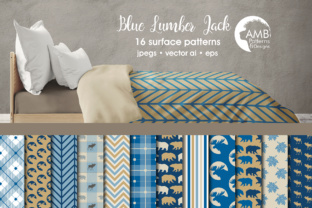
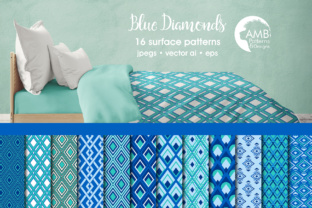
This isn’t just another “masculine” pattern collection slapped together with generic vectors. Each of the 16 papers in Geometric Blue Papers AMB-1075 is hand-crafted using original high-resolution clipart and custom-designed geometric elements—think interlocking hexagons, asymmetric chevrons, subtle tessellated triangles, concentric circles, and minimalist dot grids—all scaled and spaced to feel intentional, not busy. The palette leans into depth over brightness: slate blue next to seafoam, charcoal gray layered beneath sage, warm taupe grounding cool cerulean. It’s muted, yes—but never dull.
Why These Papers Stand Out in Real Work
Most digital paper packs sacrifice versatility for trendiness—or worse, resolution for file size. Geometric Blue Papers avoids both pitfalls. Every sheet is delivered as a standalone 12" × 12" JPEG at 300 dpi. That means crisp, artifact-free output whether you’re printing on textured cardstock for invitation suites or scaling patterns down for delicate washi tape designs. No pixelation. No blurry edges. Just reliability.
The geometry itself is purpose-built for adaptability. A diagonal stripe pattern works equally well as a background for a LinkedIn banner or as a subtle border on a teacher appreciation certificate. A low-contrast dot grid adds texture to a planner cover without competing with handwritten notes. A bold triangular motif becomes striking cupcake topper art when cropped tightly—and transforms into an elegant fabric repeat for custom pocket tees when tiled seamlessly.
Where These Papers Actually Get Used—Beyond Scrapbooks
Yes, Geometric Blue Papers shines in traditional craft spaces—scrapbooking, DIY greeting cards, gift wrap, favor tags—but its real value emerges in hybrid and professional contexts:
- Small business branding: Use the brown-and-teal geometric sheets as base textures for product labels, packaging inserts, or Shopify store banners—adding tactile warmth without sacrificing modernity.
- Educational materials: Teachers print these as reusable stationery for student planners or laminate them as durable classroom signage—geometry reinforces visual literacy while the calming palette supports focus.
- Digital content creation: Bloggers and social media managers drop these patterns into Canva or Figma as subtle backgrounds behind quote graphics or webinar slides—avoiding sterile white while maintaining readability.
- Apparel & textile design: Because each pattern is seamless and scalable, designers import them directly into textile software for custom-printed tote bags, baby onesies, or limited-run bandanas—no extra prep needed.
- Event planning: Wedding coordinators build cohesive suites (save-the-dates, menus, place cards) using one core paper—then switch to a complementary geometric sheet for napkin prints or ribbon accents—creating hierarchy without visual noise.
What to Consider Before You Use Them
Not every geometric pattern suits every context—and that’s by design. Before downloading or deploying Geometric Blue Papers, ask yourself:
- What’s the viewing distance? A dense triangle repeat reads beautifully on a 5×7" printed card but may overwhelm at poster size. For large-format prints, lean into the more open patterns—like the spaced dot grid or wide-chevron stripe.
- What’s your text contrast need? Blues and turquoises vary widely in luminance. Test overlays: lighter text on darker papers (e.g., white type on deep navy geometry) holds up better than pale yellow on medium teal.
- Is tiling required? While all patterns are designed for cohesion, only some are explicitly seamless. Check filenames—if you need infinite repeats for fabric or web backgrounds, prioritize those labeled “tile-ready” in your workflow.
- How much visual breathing room does your layout allow? These aren’t “safe” neutral papers—they carry presence. Pair them with ample negative space, clean sans-serif fonts, and restrained typography to let the geometry speak.
A Practical Note on Licensing & Output
The license for Geometric Blue Papers permits both personal and commercial use—including physical products like printed stationery, apparel, and party goods—with no per-unit fees. But remember: while you can print and sell items made with these papers, you cannot resell the JPEG files themselves as standalone digital assets or include them in your own pattern bundle. That protects both the designer’s work and your credibility as a creator who respects IP boundaries.
Also worth noting: because these are JPEGs—not vector files or layered PSDs—you’ll want to plan ahead if you intend heavy editing. Adjustments like hue shifts or opacity tweaks are fine in most photo editors, but re-coloring individual shapes isn’t possible without vector source files. If that level of flexibility is critical to your process, pair this pack with a simple color-adjustment plugin or use it as a base layer beneath editable vector overlays.
Final Thought: Design With Intention, Not Just Aesthetic
Choosing Geometric Blue Papers isn’t about checking a “masculine” box—it’s about selecting tools that align with how people actually experience design. Men (and everyone else) respond to clarity, rhythm, and authenticity—not stereotypes. A well-placed chevron conveys structure. A balanced blue-green palette evokes calm competence. A precisely spaced dot grid suggests attention to detail. When your materials embody those qualities, your message lands deeper—whether you’re mailing a birthday card or launching a B2B service.
That’s why professionals across industries keep returning to this pack: it doesn’t shout. It anchors. And in a world saturated with visual noise, that kind of quiet authority is rare—and valuable.