Shabby Digital Papers: Muted Elegance for Creative Projects
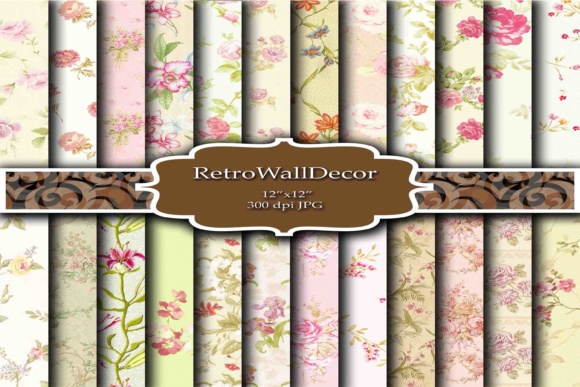
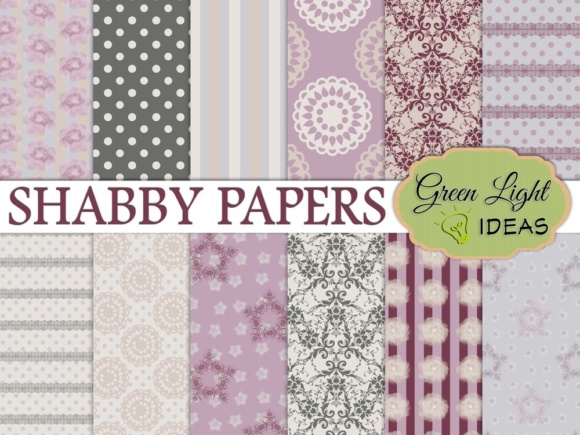
Shabby Digital Papers brings quiet sophistication to digital design—no loud trends, no forced novelty. Just twelve carefully crafted 12×12 inch (3600×3600 px) high-resolution JPGs, each rendered at 300 DPI for crisp printing and versatile digital use. The collection features soft doilies, delicate florals, subtle lace motifs, gentle polka dots, and understated damask patterns—all in a cohesive palette of muted tones. It’s not about shouting for attention. It’s about offering texture, depth, and warmth that supports your message—not competes with it.
Why “Shabby” Works So Well Today
The word “shabby” here isn’t about wear or neglect—it’s shorthand for a design sensibility rooted in gentle imperfection, tactile authenticity, and quiet charm. In a world saturated with hyper-polished gradients and AI-generated uniformity, these papers offer something human: the faint irregularity of hand-drawn lace, the organic scatter of vintage-style florals, the soft grain of aged damask. That makes them especially effective when you want your work to feel intentional, thoughtful, and grounded—not generic.
This matters whether you’re designing a wedding invitation for a couple who values heirloom aesthetics, creating planner dividers for a mindful productivity audience, or building social media templates for a small-batch ceramicist. Shabby Digital Papers doesn’t impose a style—it invites collaboration. You bring your voice, your brand, your purpose—and these papers provide the nuanced backdrop that lets it land clearly.
Real Projects, Real Uses—No Guesswork Required
You don’t need to be a professional designer to get value from this pack. Here’s how different creators are using it—practically, consistently, and without overcomplicating things:
- Scrapbookers and memory-keepers layer floral papers beneath printed photos to add dimension without distraction—especially effective for baby albums, travel journals, or milestone celebrations where emotion matters more than flash.
- Card makers use the lace and doily designs as subtle borders or full-panel backgrounds for handmade greeting cards. Because they’re high-res JPGs, they scale cleanly when printed on textured cardstock—even at 5×7 or A6 sizes.
- Small business owners repurpose the damask and polka dot papers as email newsletter headers, printable product labels, or Instagram Story templates. One café owner uses the muted florals as background textures behind daily specials—keeping branding consistent while avoiding visual fatigue.
- Educators and workshop facilitators print the papers on sticker paper to create tactile learning aids—think vocabulary cards with soft floral backs or reflection prompts on lace-textured sheets. The subtlety keeps focus on content, not decoration.
- Fabric crafters transfer select patterns (using iron-on transfer paper) onto cotton tote bags or linen napkins. The muted tones hold up well after washing, and the organic motifs read as handmade—not mass-produced.
Getting Consistent, Organized Results—Without Extra Work
Because all twelve papers share the same color family and resolution, mixing and matching feels intuitive—not chaotic. You can build a cohesive look across multiple formats (e.g., matching invitation suite + thank-you cards + digital RSVP page) without needing to adjust saturation, contrast, or scale manually.
A practical tip: rename files meaningfully before downloading—like shabby-lace-cream.jpg or shabby-damask-sage.jpg. It saves time later when you’re assembling a project in Canva, Photoshop, or even PowerPoint. And because they’re JPGs—not layered PSDs—you can drop them into almost any tool without compatibility hiccups.
If you're working with clients or teams, consider creating a simple style guide snippet: “All print materials use Shabby Digital Papers as base textures; primary type is set in 14pt serif, with accent color pulled from the dominant hue in each paper.” That kind of clarity prevents mismatched versions and keeps revisions focused on content—not layout debates.
Adapting for Different Audiences and Platforms
What works for a bridal client won’t always resonate with a tech startup—but Shabby Digital Papers adapts. Here’s how:
- For educators or nonprofits: Use the softest doily or polka dot papers as backgrounds for printable worksheets or donor thank-you letters. The gentleness signals care and approachability—without infantilizing the audience.
- For bloggers or content creators: Crop sections of the lace or damask patterns into seamless tiles for website headers or Pinterest pins. Even a 300×300 px square adds visual rhythm to an otherwise text-heavy feed.
- For freelancers building portfolios: Apply one paper as a subtle overlay (at 10–15% opacity) behind project thumbnails. It unifies diverse work samples under a shared aesthetic—without obscuring detail.
- For planners or journal designers: Print the papers on heavy cardstock, then cut into tabbed dividers. The muted colors make section labels easy to read, and the patterns prevent blank-page intimidation.
Staying Original—Without Reinventing the Wheel
Using pre-made digital papers doesn’t mean sacrificing originality. Your voice lives in how you combine, crop, layer, and contextualize—not in drawing every element from scratch. Try these low-effort, high-impact moves:
- Flip or rotate a paper 180° before placing it—subtle shifts in motif direction change energy instantly.
- Use the “multiply” blend mode in design software to let underlying text or photos show through lace or doily layers—adds depth without clutter.
- Print one paper, then hand-letter over it with fine-tip pen. Scan and digitize. You’ve created a hybrid asset—part digital, part analog—that no one else has.
Shabby Digital Papers gives you a strong foundation—not a finished product. That’s where your expertise comes in: knowing when to let the texture breathe, when to add contrast, and when simplicity says more than decoration ever could.
Whether you’re making something tangible—like a stitched fabric banner—or something entirely digital—like a downloadable habit tracker—the goal remains the same: support meaning with intention. These papers do that quietly, reliably, and beautifully.