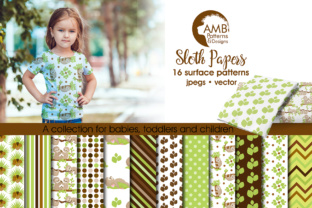
Sloth Papers AMB: Adorable Sloth Digital Papers
There’s something quietly magnetic about sloths—their calm presence, gentle expressions, and unhurried charm make them more than just internet icons. Sloth Papers AMB transforms that quiet appeal into a cohesive, ready-to-use design resource: 16 original, color-coordinated digital papers featuring hand-drawn sloths in relaxed, playful poses—hanging, napping, clinging, or simply smiling from the branches. Each paper is crafted with intention: designed to work together, printed beautifully, and built for real-world creative use.
What Makes Sloth Papers AMB Stand Out
Unlike generic clipart packs or mismatched pattern sets, Sloth Papers AMB is intentionally unified. Every background shares a consistent palette—soft sage greens, warm creams, muted teals, and dusty corals—that harmonizes across all 16 designs. No guesswork, no color correction needed. The sloths themselves are original illustrations—not traced, not stock-derived—drawn with subtle texture and expressive detail that holds up at print size.
Each paper arrives as a standalone 12" × 12" JPEG at 300 dpi. That means crisp output for physical projects: scrapbook pages, handmade cards, printable wall art, fabric transfers, or custom stationery. Because they’re high-resolution and independently saved, you can mix and match freely—layer a sleepy sloth background under bold typography for an invitation, then switch to a leafy vine pattern for the envelope liner—all without visual dissonance.
Creative Uses That Go Beyond “Cute”
“Adorable” opens doors—but it’s consistency, versatility, and clarity that keep them open. Here’s how different creators are putting Sloth Papers AMB to practical use:
- Small business owners use the papers to design cohesive brand collateral—think thank-you cards with matching gift tags, product packaging inserts, or seasonal email headers that reflect warmth and approachability without sacrificing professionalism.
- Educators and homeschoolers print themed learning materials: behavior charts with encouraging sloth motifs, reading logs shaped like tree limbs, or classroom posters that invite calm focus—especially helpful for neurodiverse learners who respond well to gentle, non-stimulating visuals.
- Bloggers and content creators build branded Pinterest pins and Instagram story templates using layered sloth papers as subtle backdrops—keeping text legible while adding personality. A soft green sloth background behind a wellness tip feels grounded; the same paper under a productivity quote adds irony with warmth.
- DIY crafters and makers cut vinyl decals, design sublimation mugs, or create custom washi tape by isolating sloth elements (using basic selection tools in Canva or Photoshop) and scaling them thoughtfully—no distortion, no pixelation.
Designing With Intention—Not Just Decoration
Using Sloth Papers AMB effectively isn’t about covering every surface in sloths. It’s about choosing where calm, character, and cohesion matter most. For example:
- Start with function: Is this background for a birthday invite? Prioritize readability—choose a lighter paper (like “Moss Nap” or “Cloud Hug”) so names and dates stand out. Reserve busier patterns (“Vine Tangle” or “Berry Cluster”) for decorative accents—borders, banners, or secondary panels.
- Maintain rhythm: When assembling a multi-page project (e.g., a baby shower planner), rotate between 3–4 papers max. Too many variations dilute unity; too few feel repetitive. Let one paper anchor the layout (e.g., the cover), then echo its dominant color or motif subtly elsewhere.
- Respect scale: At 12×12 inches and 300 dpi, these papers scale beautifully—but avoid stretching them beyond 150% in digital editors. If you need larger coverage (e.g., for a banner), tile two copies edge-to-edge instead of distorting resolution.
Real Projects, Real Results
A freelance greeting card designer used Sloth Papers AMB to refresh her spring collection—replacing generic florals with sloths nestled among ferns and blossoms. Her best-selling card? A simple “You’re Doing Great” message over “Dew Drop Doze,” paired with minimalist sans-serif type. Customers noted how “soothing” and “uncluttered” it felt—a direct result of intentional negative space and tonal harmony.
An indie publisher building a mindfulness journal chose five Sloth Papers AMB backgrounds for section dividers—each tied to a theme (breathing, rest, gratitude, presence, reflection). Readers reported the sloths acted as gentle visual anchors, helping them pause before turning the page. No explanation needed. Just quiet resonance.
Who Benefits Most—and Why
If your work involves communication—even indirectly—you’ll find value here. Marketers crafting nurture sequences for wellness brands appreciate how sloth imagery conveys rest without passivity. Entrepreneurs launching eco-conscious products lean into the natural palette and organic shapes to reinforce sustainability values. Craft instructors building downloadable workshops use the papers to create polished, print-ready handouts that feel both professional and personable.
Even if you’re not a designer, Sloth Papers AMB lowers the barrier to polished output. You don’t need advanced software: upload any JPEG directly into Canva, Cricut Design Space, or Microsoft Word. Adjust opacity for overlays, crop for social posts, or print full-bleed for framing. The files are purpose-built—not just pretty, but practical.
Keeping It Original—Without Starting From Scratch
Using curated digital papers doesn’t mean sacrificing authenticity. Your voice lives in how you combine them: the font you choose, the photo you layer on top, the message you write. Sloth Papers AMB gives you reliable texture and tone—so you spend less time wrestling with color theory and more time refining your idea.
Try this: Pick one sloth paper as your base. Add a photo of your product or team in soft natural light. Overlay a short headline in a clean, medium-weight font—set at 70% opacity for subtlety. That’s a social graphic that communicates warmth, care, and clarity in under five minutes.
Sloth Papers AMB isn’t about slowing down creativity—it’s about removing friction so your best ideas land with confidence, consistency, and quiet charm.